Published April 13, 2026
Thurston County Home Energy Score: What Buyers and Sellers Should Know

If you’re planning to buy or sell a home in Thurston County, there’s a new policy change worth paying attention to.
Thurston County has approved a Home Energy Score policy that is expected to take effect in 2027. When it takes effect, homeowners in unincorporated Thurston County will need to include a Home Energy Score with the listing when selling certain homes. The county says the requirement will apply to single-family homes and attached ADUs, while mobile and manufactured homes are not included.
What Is a Home Energy Score?
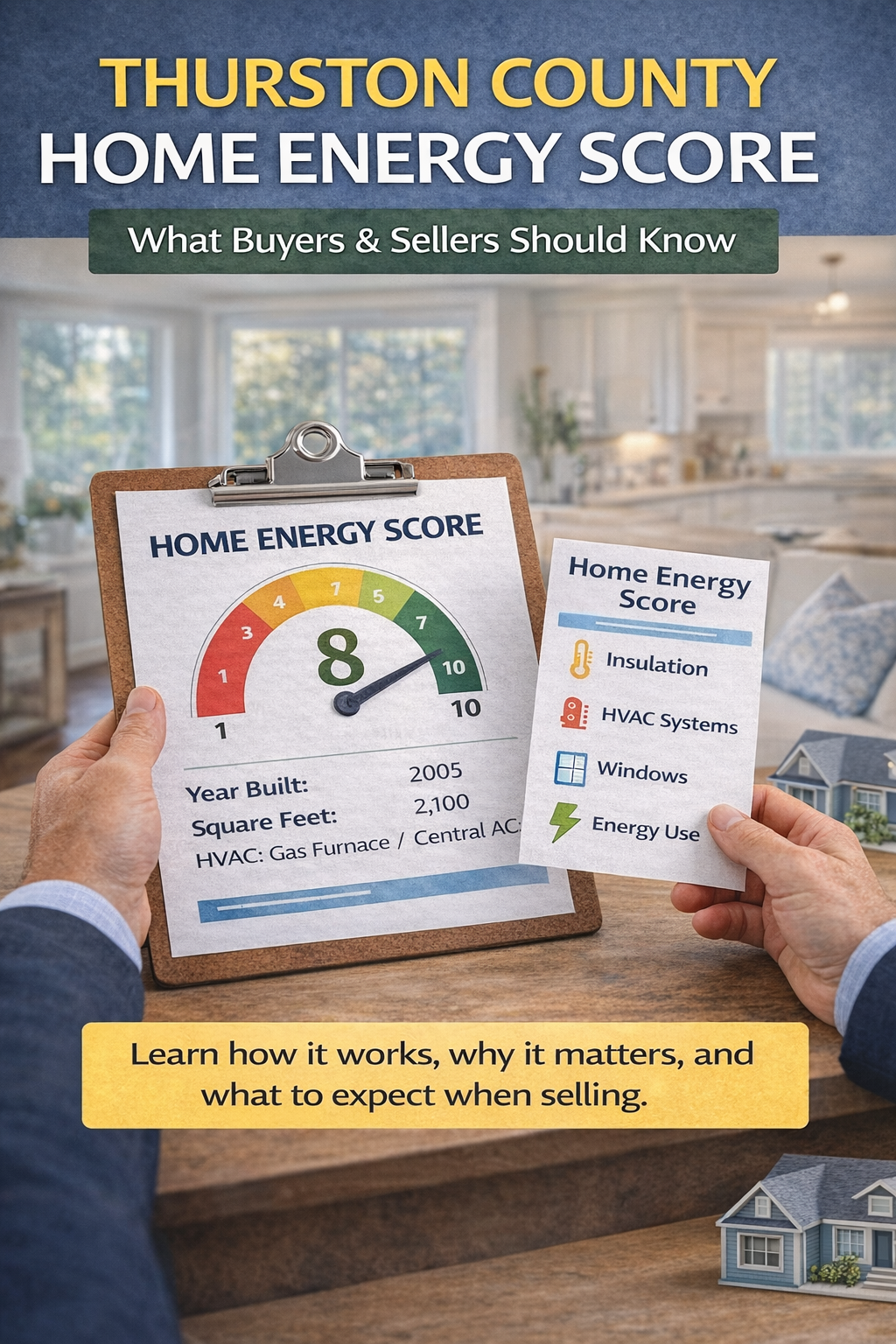
A Home Energy Score, or HES, is a standardized energy assessment that gives a home a rating from 1 to 10. Thurston County says it looks at things like:
- heating and cooling systems
- insulation
- foundation
- windows
- overall home efficiency
The purpose is to give buyers a clearer picture of how energy efficient a home may be and what energy use and costs could look like. Thurston County describes it as a way to “remove the guesswork” when buyers compare homes and budget for utility costs.
Is This Required Right Now?
Not yet.
The key point is that the Thurston County policy is approved but not currently in effect. The county’s official page says it is expected to take effect in 2027.
That means this is something sellers should start becoming aware of now, but it is not accurate to say that all Thurston County homes are required to have a Home Energy Score today.
Where Does This Apply?
Right now, the county’s official language points to unincorporated Thurston County.
That distinction matters because homes located inside cities like Olympia, Lacey, or Tumwater may not fall under the county’s unincorporated-area rules in the same way. If you’re unsure whether your property is in unincorporated Thurston County or inside city limits, that is worth confirming before planning around this requirement. This last point is an inference based on the county’s permitting jurisdiction over unincorporated areas.
What Does This Mean for Sellers?
For sellers, the Home Energy Score may eventually add one more step before listing.
Once the policy is in effect, sellers in the covered areas will need to include an energy rating with the listing. Thurston County also notes that the policy does not require homeowners to make upgrades, it is not part of county tax valuation, and there may be exemptions or subsidies for low-income households.
In practical terms, this means sellers may need to plan ahead a little more before going live on the market.
What Does This Mean for Buyers?
For buyers, this is mostly more information.
Instead of guessing how efficient a home may be, buyers will have a standardized score to help compare homes and better understand possible energy costs. That can be especially helpful when comparing two homes that seem similar on paper but may perform very differently when it comes to heating, cooling, and insulation.
Is This a Big Deal?
It may sound like a small change, but it could become an important part of how homes are prepared, marketed, and evaluated in the future.
For sellers, it may become part of pre-listing prep.
For buyers, it adds another layer of transparency when comparing homes.
And because Washington has also been discussing broader residential energy-labeling policy, this may be part of a bigger long-term trend rather than a one-off local change.
Final Thoughts
The biggest takeaway is this:
Thurston County has approved a Home Energy Score policy, but it is expected to take effect in 2027, and the county currently describes it as applying to homes in unincorporated Thurston County.
So while this is not an immediate requirement for every seller today, it is absolutely something buyers and sellers should be aware of moving forward.